

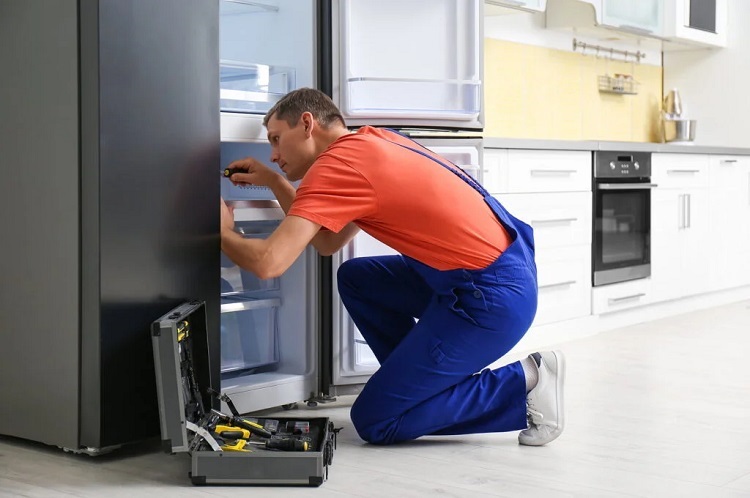
Behind every urgent call for fridge repair in Singapore lies an untold story of corporate strategies, consumer vulnerabilities, and a shadowy marketplace where technical expertise meets economic desperation—revealing how household emergencies become battlegrounds for influence, profit, and control.
The evidence emerges from scattered testimonials, industry whispers, and careful market analysis. What appears to be simple service provision masks complex webs of dependencies, strategic positioning, and information asymmetries.
Table of Contents
The Intelligence Network of Appliance Failure
In Singapore’s residential towers, sophisticated intelligence networks operate around the clock. When refrigeration fails, information flow becomes as critical as coolant flow. Industry sources reveal “common repairs range from S$80 to S$300 or higher”, but these figures represent only surface-layer economics.
Real intelligence lies in timing. “The average Singaporean household maintains refrigerators for around 8-10 years,” creating predictable vulnerability cycles that experienced operators anticipate and exploit. Like seasoned intelligence officers, successful repair technicians maintain detailed profiles of equipment ages, failure patterns, and customer behaviour across residential complexes.
What emerges is a market driven by information advantage rather than transparent pricing. Arriving technicians possess critical intelligence: parts costs, endemic problems, and whether appliances approach economic thresholds where replacement becomes more viable than repair.
Operation Domestic Vulnerability
Customer testimonials read like debriefing reports from field operations. One homeowner described how a technician “was very professional and patient” when explaining repairs to elderly parents. This interaction reveals sophisticated psychological operations at work.
The targeting is precise:
• Elderly residents with limited technical knowledge
• Families with young children facing food safety urgency
• Professional households where time pressure overrides cost considerations
• Recent immigrants unfamiliar with local market dynamics
• Tenants uncertain about repair responsibilities
Each demographic requires different operational approaches, pressure points, and information management strategies. Sophisticated operators develop psychological profiles for different customer types.
The Parts Pipeline: A Study in Strategic Dependencies
Perhaps nowhere is the intelligence aspect more apparent than in the parts supply chain. Industry sources acknowledge that “the repair service should have access to a wide range of refrigerator parts, which can speed up the repair process”, but this seemingly straightforward statement masks a complex strategic reality.
Parts availability represents a form of economic warfare. Technicians who control access to genuine components hold decisive advantages over both customers and competitors. The scarcity of specific parts—whether real or manufactured—becomes a powerful negotiating tool that can transform a S$80 repair into a S$300 replacement recommendation.
Investigation reveals that “minor and common problems, such as a faulty thermostat or a malfunctioning fan, are often worth repairing. On the other hand, major issues like a failing compressor or repeated breakdowns might signal that the refrigerator is approaching the end of its usable life”. This guidance provides cover for strategic misdiagnosis when economic incentives align against simple repairs.
Psychological Operations in Domestic Settings
The most revealing intelligence comes from understanding how information warfare plays out in Singapore’s domestic spaces. The tropical climate creates unique pressure: food spoilage accelerates exponentially, creating time-sensitive decision-making environments where rational economic calculation becomes compromised.
Customer testimonials reveal the effectiveness of these psychological operations. “I recently had the pleasure of having Ethan to do my fridge repair, and I couldn’t be happier with the service he provided,” reads one account. “Ethan was not only friendly but also incredibly knowledgeable about refrigerators. He took the time to explain the issue clearly and went the extra mile to check for any additional issues even after fixing the main problem.”
This seemingly positive interaction demonstrates sophisticated influence techniques: establishing personal rapport, demonstrating superior knowledge, positioning additional services as customer benefits rather than profit centres. The customer departs grateful, unaware they may have been subjected to a carefully orchestrated influence operation.
Economic Intelligence and Market Manipulation
The financial dimension reveals the most sophisticated aspects of this hidden marketplace. The industry promotes “warranties ranging from 30 days to 12 months” as customer protection, but investigation suggests these serve dual purposes as market intelligence gathering mechanisms.
Warranty claims provide detailed data about failure patterns, customer complaint behaviour, and price sensitivity across different demographic segments. This intelligence enables increasingly sophisticated targeting and pricing strategies that maximise profit extraction whilst maintaining the appearance of customer service.
The 24/7 availability promoted by many operators—”whatever the problem, whatever the time, Appliance Repair will cater for your needs and answer the emergency call”—represents operational readiness comparable to intelligence services. The infrastructure required to maintain round-the-clock response capabilities suggests profit margins substantial enough to justify significant operational overhead.
The Counter-Intelligence Response
Sophisticated consumers have begun developing counter-intelligence capabilities. Online reviews function as early warning systems, whilst consumer forums share tactical intelligence about pricing, quality, and negotiation strategies. Some residents have formed informal networks to share technician recommendations and price benchmarking data.
The most advanced consumer operations involve preventive intelligence gathering: establishing relationships with qualified technicians before emergencies arise, understanding warranty implications and parts availability, and developing diagnostic capabilities that reduce dependence on external technical assessment.
Future Strategic Implications
The trajectory suggests evolution toward sophisticated information warfare. Smart appliances will generate unprecedented diagnostic data, potentially shifting power balances. Environmental regulations may provide cover for accelerated replacement recommendations, whilst technological complexity increases consumer dependence on expert assessment.
The evidence suggests that Singapore’s refrigeration repair ecosystem operates as a complex intelligence network where information advantage determines economic outcomes. For consumers navigating this hidden battlefield, understanding the operational realities becomes essential preparation for defending against systematic information manipulation designed to maximise profit extraction during domestic crisis moments.
In Singapore’s air-conditioned towers, where modern life depends on reliable refrigeration, the battle for control over fridge repair represents more than technical service—it constitutes a sophisticated intelligence operation targeting domestic vulnerability at its most fundamental level.