

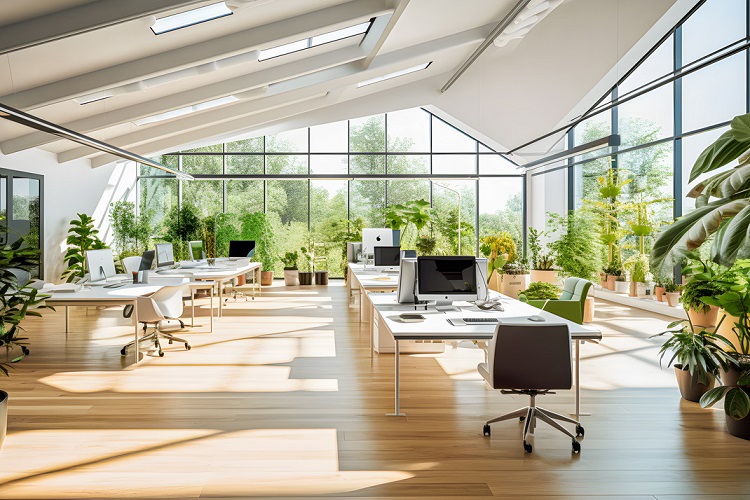
Offices and other commercial buildings consume around 20% of U.S. energy. It’s a big deal for energy and the environment. Even so, offices can reduce their energy use by at least 30%. Doing so doesn’t hurt comfort or output. Small changes can save money and help the planet.
Table of Contents
Start With the Basics: Lighting and Temperature
Lighting consumes more energy in offices than almost all other sources. The ancient fluorescent tubes buzzing above your workspace? They’re big energy users. LEDs today use way less energy and last a lot longer. Sure, the price is high at first. But you’ll save money on your electric bill, so it pays for itself pretty quick. Sunlight works even better. And it’s free. Happy employees are more likely to show up when their workspace has good lighting. Furthermore, you can use less artificial light by putting desks by windows. You could also use lighter paint.
Regulating temperature offers another significant opportunity. Every degree you change the thermostat means saving on heating and cooling expenses. In summer, adjust it to 78 rather than 72. During winter, consider 68 rather than 74. Workers may complain initially, but they adapt swiftly, particularly when you clarify how much carbon dioxide this prevents from entering the atmosphere.
Smart Technology Makes Saving Easy
Technology has revolutionized how workplaces use energy. Lights go off automatically when rooms are empty and smart thermostats adjust temperatures based on occupancy. Why warm the entire building at 6 AM when no one gets there until 8?
The team at Blues IoT says that IoT energy monitoring takes this concept further by connecting every energy-using device to a central system that tracks consumption in real-time. Managers can identify energy vampires; devices that consume electricity even when they’re not in use. The printer in the corner could be wasting $200 annually while it remains in standby mode.
Rethink Your Equipment
Modern office equipment is efficient, however, many offices still rely on old, inefficient technology. The 15-year-old copier might still work, but it probably uses triple the energy of current models. When substituting machinery, look at efficiency ratings. Computers today use half the power of those from five years ago. Laptops are generally more efficient than desktops. If desktops aren’t essential for specific tasks in your office, laptops are a good idea.
Don’t forget about the kitchen. The ancient refrigerator buzzing in the break room might be costing you hundreds each year. New efficient models compensate for their cost by saving energy. The coffee machine that remains warm throughout the day? Substitute it with a brewing system that operates on demand. Minor adjustments in the kitchen result in significant savings.
Create a Culture of Conservation
The most advanced technology is ineffective if workers squander energy due to routine behavior. Creating a culture focused on energy efficiency requires no investment yet offers significant rewards. Begin with basic prompts. Labels by light switches and thermostats are surprisingly effective. Distribute monthly energy reports for everyone to see improvements. Some offices foster competition: the department that saves the most energy wins pizza.
Encourage staff to turn off computers nightly. A continuously running computer costs about $50 per year to run. Repeat that for each desk in your workspace. Screen savers consume power. They don’t save it.
Conclusion
A sustainable office doesn’t need major renovations. It doesn’t need large costs. Simple changes like using LEDs, adjusting thermostats, and upgrading equipment quickly improve results. Smart tech automatically monitors and reduces waste. The real key is to get everyone involved. Each kilowatt saved benefits air quality, reduces expenses, and helps the Earth. Take the first step toward sustainability; begin now.